 Coupons
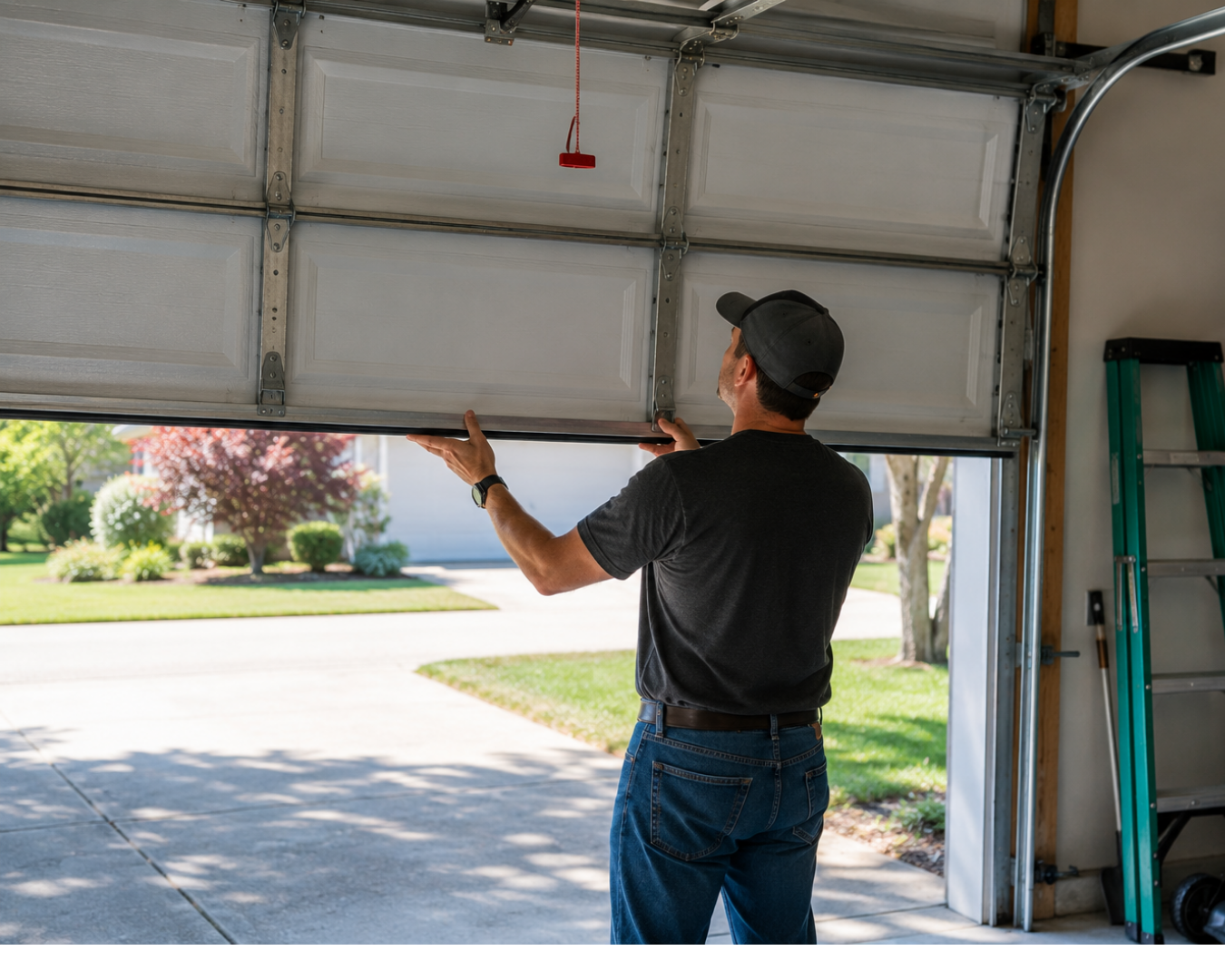
 With about eleven weeks until winter, now is the time to focus on garage door maintenance for winter.
The National Weather Service office here in Indianapolis puts our average first freeze at October 26. Outlying and low-lying areas go earlier- Lafayette often sees its first frost in September. So if you are reading this in late August, that is your window, and it is shorter than it feels.
Late August is a strange time to think about garage door maintenance for winter. It is still warm, the door is presumably working, and winter is theoretical. But garage doors around here do not fail gradually through the fall. They fail on the first genuinely cold morning, all at once, across the whole metro. The parts that break in January are already worn today. Cold weather just finishes them off.
We have been doing this in central Indiana since 1979. Everything on this list is cheaper and easier to handle now than it will be at 6:30 in the morning in a snowstorm with your car trapped inside.
Springs First. Cold Is What Breaks Them.
If you do one thing off this page, do this one.
Garage door springs fail more in winter than any other season. That is not folklore. Two things are happening at once. Steel becomes less ductile as it gets colder, so a spring that has been flexing fine for years suddenly has less margin before it fractures. And springs are rated in cycles, not years- which means most springs that break in January were already near the end of their service life back in October.
Cold does not create the problem. It exposes it.
Which is the whole argument for looking now. A spring inspected in September gets replaced on your schedule. A spring that breaks in January gets replaced on winter’s schedule.
The test you can safely run: Close the door. Pull the emergency release cord to disconnect the opener. Lift the door by hand to about waist height and let go. A properly balanced door stays roughly where you left it. If it drops or slides down, the springs have lost tension and the door is out of balance. Reconnect the opener when you are done.
What you should not do: Never adjust or replace springs yourself. They store enough energy to lift a door weighing several hundred pounds, and they hold it under tension whether the door is up or down. Doing it right takes proper winding bars, correctly cycle-rated parts, and training. People get hurt doing it wrong every year.
Stop using the door and call if you see any of this: a loud bang from the garage, a visible gap in a spring coil, a door that suddenly feels much heavier, a door that opens crooked, or a door that will not stay up on its own. That is an emergency service call, not a wait-and-see.
Winter Undoes What Summer Did
All summer your door dealt with steel expanding in the heat. Winter runs it backward. Steel contracts as it cools, and that changes the fit of the whole assembly. Bolts that were snug in August work loose. Clearances shift. Parts that were sliding past each other cleanly start catching, or start rattling.
This is a good part of why doors sound different in cold weather, and it is why a fall hardware check earns its fifteen minutes.
Go around the door with a socket wrench. Check the hinge bolts, the track bracket bolts, and the roller bracket bolts. Snug is the target- not cranked down. Overtighten a track bracket and you pinch the track, which is a new problem you did not have before.
Get the Right Lubricant On While It Is Still Warm
Lubricant matters more in winter, and which one you use matters more too.
Heavy greases thicken as temperatures drop, and thickened lubricant adds drag instead of removing it. That drag lands on the opener, which is already working harder in the cold. So the wrong product actively works against you in January.
Use a garage door lubricant, lithium or silicone based. Those stay workable across the temperature range we actually get here. Hinges, roller stems, springs, and bearing plates.
Leave the inside of the track alone. Rollers are meant to roll, not slide, and grease in the track just collects grit. And skip the WD-40- it is a solvent, so it strips out the lubricant that is there rather than adding any.
Timing matters on this one. Do it in September or early October. Lubricating a door that is already frozen and stiff does not accomplish much.
Replace the Weatherstripping Now. Not in January.
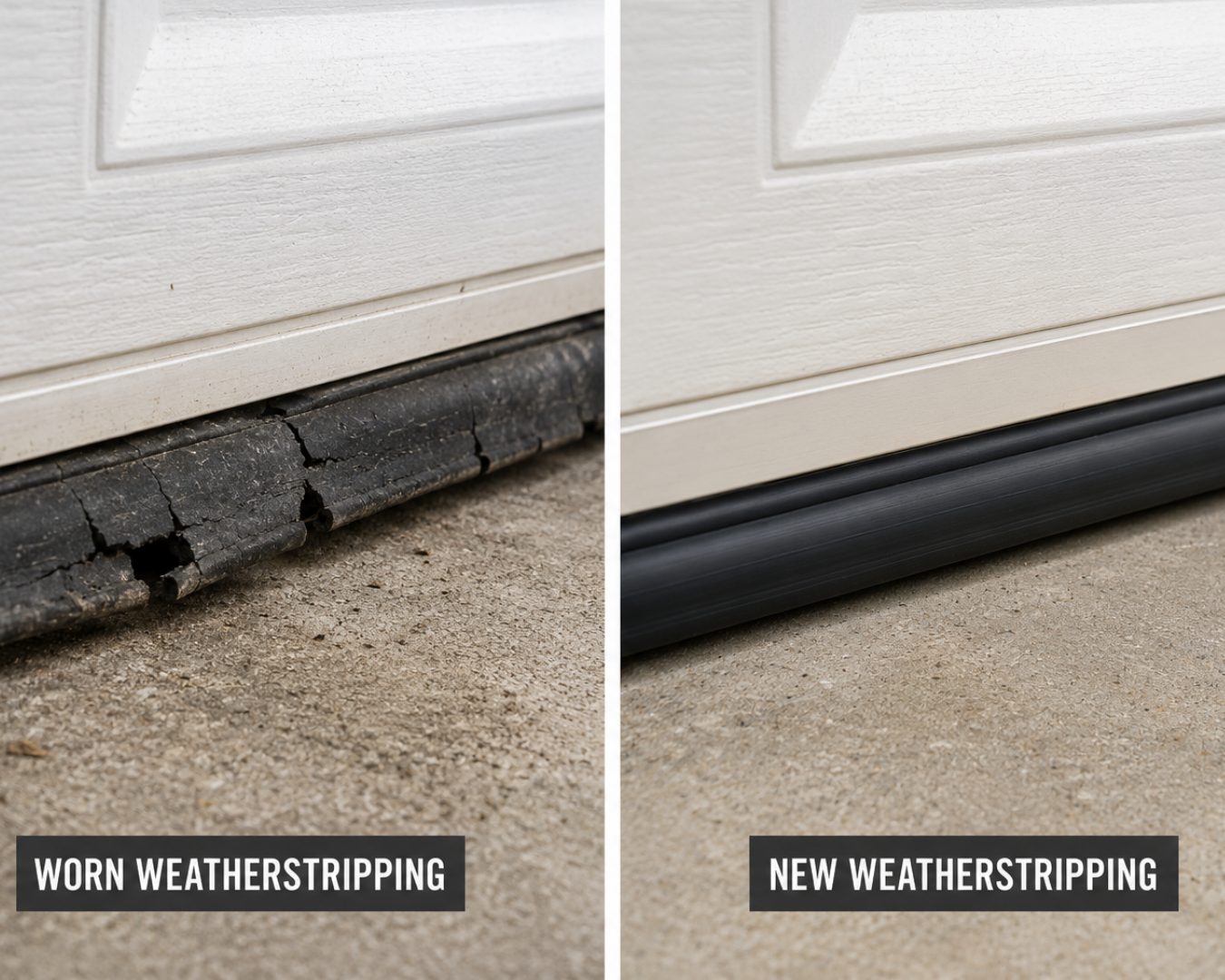
Rubber and vinyl stiffen and lose flexibility below freezing. A seal that is marginal in October- cracked at the edges, flattened in places- is a failed seal in January. It will not conform to the floor, and cold air, blowing snow, and meltwater all come under the door.
Relative to what it costs, this is the highest-return item on the page. Three things to look at:
- The bottom seal. Tears, flattened sections, places where it has pulled out of the retainer. If daylight shows under a closed door, it is done.
- The perimeter stop molding. The weatherstripping along the sides and top of the opening. Cracked, brittle, or pulling away from the frame all mean replacement.
- A threshold seal. The rubber strip that bonds to the garage floor and gives the door something to seal against. Worth considering here specifically, because it stops snowmelt from running under the door and refreezing on your garage floor.
The Frozen Door, and the Mistake Everybody Makes
This generates a fair number of service calls every winter, and it is almost entirely preventable.
Meltwater collects along the bottom of the door. Temperature drops. The bottom seal freezes to the concrete. Then somebody hits the remote.
Now the opener is trying to lift a door that is bonded to the floor, and something has to give. Usually the bottom seal tears loose. Sometimes it is the cables coming off the drums, the door racking out of alignment, or the opener’s gear assembly. All three of those cost considerably more than a seal.
If your door is frozen down: Stop pressing the remote. Repeated attempts are exactly how a stuck door becomes a broken door. Disconnect the opener with the release cord and try lifting by hand. If it will not come, break the ice bond along the bottom edge rather than forcing the panel, then clear the slush and ice out before you close it again.
To prevent it: Keep the area along the bottom of the door clear of accumulated snow and slush. A working threshold seal and good drainage away from the door do most of the work for you.
Road Salt Is the Harshest Thing Your Door Will Meet
Indianapolis salts and brines heavily, and that salt does not stay on the road. It rides in on your tires, splashes onto the bottom panel and the lower hardware, and puddles on the garage floor right where the bottom brackets sit.
Salt is far more aggressive on steel than plain water. The bottom panel, the bottom brackets, the lift cables where they anchor, and the lower track all sit in it for four months. This is a real, specific reason garage door hardware in the Midwest wears out faster than identical hardware in a dry climate.
What helps: Rinse the bottom of the door and the lower hardware periodically through the winter, on a day above freezing, and let it dry. Touch up paint chips before winter rather than after- bare steel is where salt gets its foothold.
And when it is time to replace parts anyway, ask about galvanized or coated hardware and nylon rollers with sealed bearings. They hold up better against salt and they are quieter besides.
Snow, Slush, and Your Safety Sensors
The two photo eyes near the floor are the most exposed and most abused parts of the whole system in winter. They sit a few inches off the ground, which is precisely where snow, slush, and salt spray land. The CPSC specifies mounting them 4 to 6 inches above the floor, so there is not much room to get them out of the weather.
A filmed-over lens, or a bracket knocked out of alignment by a snow shovel, produces the classic symptom: the door starts to close, stops, goes back up. Over and over. Nothing in its path.
Fall prep: Clean both lenses. Confirm the alignment lights are steady rather than blinking. Check that the brackets are secure. Then keep an eye on them through the winter, because this is the single most common cold-weather nuisance call we take and it is usually a thirty second fix with a rag.
If cleaning does not settle it, opener repair covers sensor alignment.
One thing to never do: do not tape over the sensors or disable them to force the door closed. They are the primary safety feature on the door.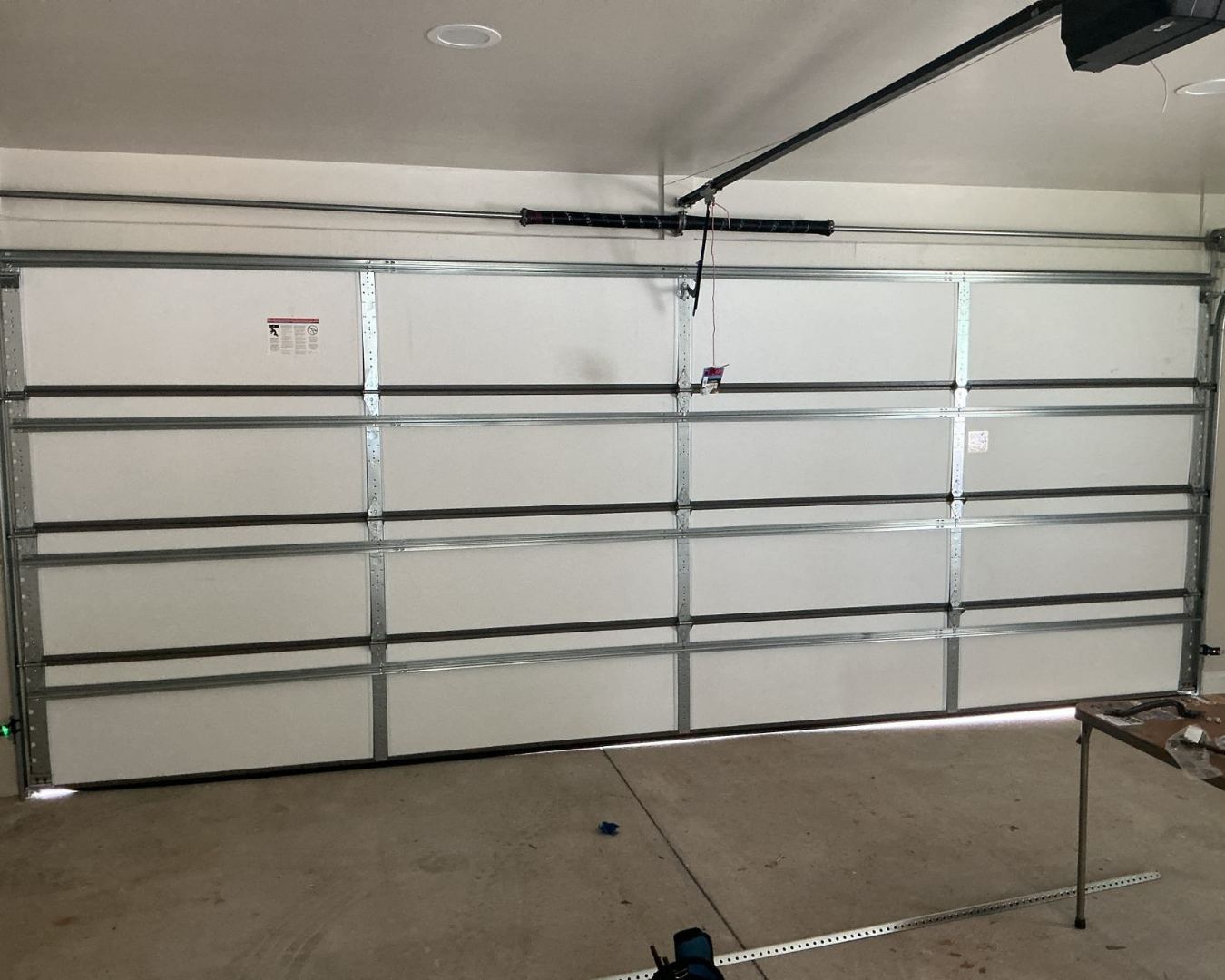
Opener Force Settings and the Cold
Your opener has force settings that determine how much resistance it will push against before deciding something is in the way. A cold door is stiffer and heavier to move than a warm one. An opener set at the edge of its range in July starts misbehaving in January.
You will see it one of two ways.
Either the door reverses partway through closing, because the opener is reading normal winter stiffness as an obstruction. Or somebody cranked the force up too far at some point in the past, in which case the door will cheerfully close on something it should have stopped for.
Force adjustment belongs with a technician. It has to be set against a door that is properly balanced first, then verified with a safety reversal test. That is part of a standard maintenance visit.
To be blunt about it: cranking the force up to muscle through a stiff door is not a repair. It is disabling a safety feature to work around a mechanical problem.
Ice Storms and Power Outages
Central Indiana gets ice, and ice takes down power lines. An opener with no power and no backup is a door you are lifting by hand, in the dark, possibly with a car inside that you need.
Two things to sort out before winter.
First, find your emergency release cord and confirm it actually works. Most people have never pulled it. Test it now while conditions are pleasant, and know how to reattach it afterward– that is the part that catches people.
Second, if your opener does not have battery backup, ask about it. Battery backup openers are common now, and it is the difference between an inconvenience and being genuinely stuck.
Insulation and the Heating Season
If your garage is attached- and especially if there is a bedroom or bonus room above it- an uninsulated door is a large hole in your building envelope during the months when heating costs the most.
Insulated doors are rated by R-value, where a higher number means more resistance to heat transfer. Worth knowing before you shop: the Door and Access Systems Manufacturers Association explains that a published R-value describes a section of the door rather than the complete installed assembly. The advertised number and real-world performance are not the same thing, so ask what a specific door is actually rated on.
We will be straight with you about what insulation does. It will not turn an unheated garage into a warm room. What it does is meaningfully cut heat transfer, keep the garage and the rooms next to it noticeably less cold, and make the door quieter and more rigid. If you want the longer version, we have written about what insulated doors actually do and do not do.
If your door is twenty years old, uninsulated, loud, and already needing repairs, that is a different conversation from a tune-up. Ask a technician whether repair or replacement makes more sense for the door you actually have.
Your Fall Prep Checklist
Target: done by the end of September. That leaves you roughly four weeks of margin before the October 26 average, and more if you are somewhere that freezes early.
- Balance test. Disconnect the opener, lift to waist height, confirm the door holds position. Reconnect when done.
- Safety reversal test. Lay a two by four flat on the floor in the door’s path and close the door. It should contact the wood and reverse immediately- the test CPSC recommends. If it does not reverse, that needs service now.
- Photo eye test. With the door closing, pass an object through the beam near the floor. It should stop and reverse. Clean both lenses.
- Hardware check. Snug the hinge, track bracket, and roller bracket bolts. Do not overtighten.
- Lubricate. Lithium or silicone garage door lubricant on hinges, roller stems, springs, and bearing plates. Not the track.
- Inspect cables and rollers. Fraying, broken strands, rust, rollers that stick rather than roll. Cables are inspection only- never a homeowner repair.
- Seals. Replace the bottom seal and any cracked perimeter weatherstripping. Consider a threshold seal.
- Emergency release. Find it, pull it, confirm it works, reconnect it.
- Clear the tracks. Wipe out leaves, grit, and debris.
- Check the drainage. Water should run away from the door, not toward it- standing water is what freezes the door down. If your gutters are dumping runoff near the garage opening, or the downspouts drain toward the driveway, that is where the problem starts.
One Practical Reason Not to Wait
Here is the scheduling reality, stated plainly.
When the first hard freeze hits Indianapolis, garage door repair demand spikes across the entire metro on the same morning. Springs break. Openers fail on frozen doors. Every company in town is booked, including us. Wait times that are same-day in September get considerably longer in the middle of a cold snap.
A door inspected in September gets fixed on your terms. A door that fails in January gets fixed whenever somebody can get to it.
We have written the longer case for staying ahead of it if you want the arithmetic.
Frequently Asked Questions
Why do garage door springs break in cold weather?
Steel becomes less ductile as it gets colder, so a spring near the end of its service life has less margin before it fractures. Springs are also rated in cycles rather than years, which means most springs that break during a cold snap were already worn out. The cold does not cause the wear. It exposes it. That is why inspecting before winter is worth doing.
When should I get my garage door serviced for winter in Indianapolis?
September through early October. That puts you ahead of the average first freeze, which the National Weather Service puts around October 26 for Indianapolis, and well ahead of the demand spike that follows the first genuinely cold morning. If you are in an outlying area, move it earlier.
What do I do if my garage door is frozen to the ground?
Stop pressing the remote- repeated attempts are how a stuck door becomes a broken one. Pull the emergency release to disconnect the opener and try lifting by hand. If it will not release, break the ice along the bottom edge rather than forcing the panel, then clear the slush and ice before closing the door again.
What kind of lubricant should I use on a garage door in winter?
A garage door lubricant that is lithium or silicone based, since those stay workable in cold temperatures. Avoid heavy greases- they thicken in the cold and add drag rather than reducing it. And avoid WD-40, which is a solvent that strips lubricant instead of applying it.
Does road salt really damage a garage door?
Yes, and more than plain moisture does. Salt rides in on your tires and splashes onto the bottom panel, the bottom brackets, the lower cable anchors, and the lower track. Rinsing the bottom of the door on a day above freezing, and touching up paint chips before winter, both help meaningfully.
Why does my garage door reverse before closing when it is cold?
Two likely causes. Snow, slush, and salt film on the photo eye lenses, or a sensor bracket knocked out of alignment, will break the beam and send the door back up. The other possibility is that the opener’s force setting is too low for a stiffer cold door, so it reads normal winter resistance as an obstruction. Clean the lenses first- that solves it most of the time.
Is an insulated garage door worth it in Indiana?
For an attached garage, particularly one with a room above it, yes. An insulated door reduces heat transfer during the months when heating costs the most, keeps adjacent rooms less cold, and makes the door quieter and more rigid. It will not heat an unheated garage, so it is a real improvement rather than a transformation.
How often should a garage door be serviced?
Once a year for most homes, with your own visual check and lubrication in between. In this climate, fall is the logical time for the annual visit, because it puts the professional inspection right before the season that is hardest on the door.
Book a Fall Tune-Up With Garage Doors of Indianapolis
A tune-up covers the parts you cannot safely check yourself: spring tension and door balance, cable condition, roller and bearing wear, opener force settings, and a verified safety reversal test.
It is the same visit whether you book it in September or after something breaks in January. The difference is that in September you get to pick the day.
We have been locally owned and operated in Indianapolis since 1979, with IDA certified installers and technicians, and we serve communities across central Indiana including Martinsville, Anderson, Lafayette, and Bloomington. Book a service call today!