 Coupons
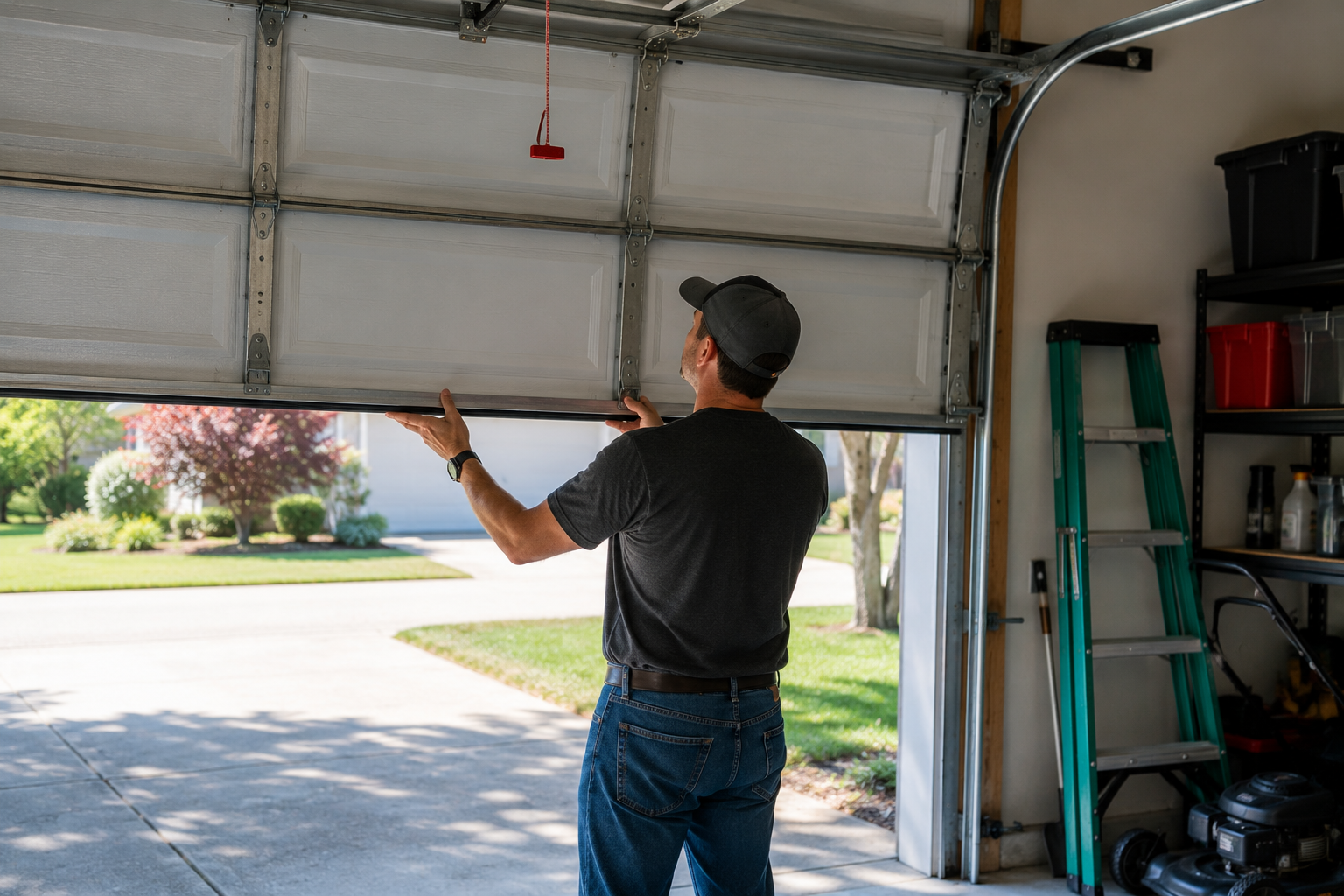
You press the button and nothing happens. Or the door starts down, then pops right back up. Few things throw off your morning faster than a garage door opener not working, especially when it’s 15 degrees outside and your car is on the wrong side of the door.
The good news is that many opener problems have simple causes you can check yourself in a few minutes. In this guide, our team at Garage Doors of Indianapolis walks you through the most common reasons for a garage door opener not working, the quick fixes that are safe to try at home, and the warning signs that mean it’s time to call a professional.
Start Here: A 5-Minute Checklist
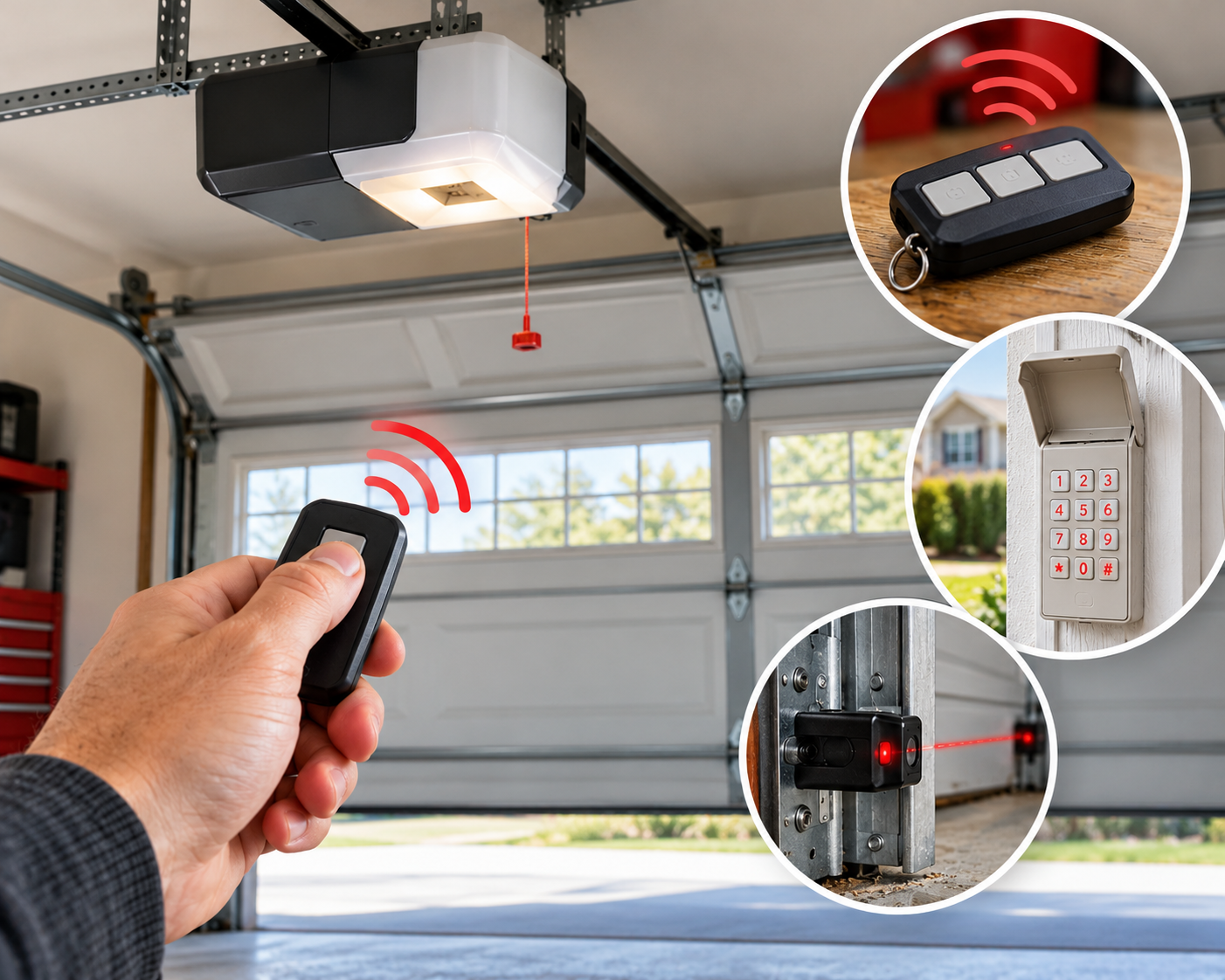
Before you assume the worst about a garage door opener not working, run through these quick checks. They solve a surprising number of service calls.
- Does the opener have power? Check that the motor unit is plugged in, the outlet works, and the breaker or GFCI outlet in the garage hasn’t tripped.
- Does the wall button work? If the wall button opens the door but the remote doesn’t, the problem is almost always the remote, not the opener.
- Is the lock feature turned on? Many wall consoles have a “lock” or “vacation” button that blocks every remote. Check the console and turn it off.
- Are the safety sensors lit and lined up? Look at the two small sensors near the bottom of the door tracks. Each should have a steady light.
- Is the door disconnected? If someone pulled the red emergency release cord, the motor will run but won’t move the door.
If none of these fix the problem, use the sections below to match what you’re seeing to the most likely cause.
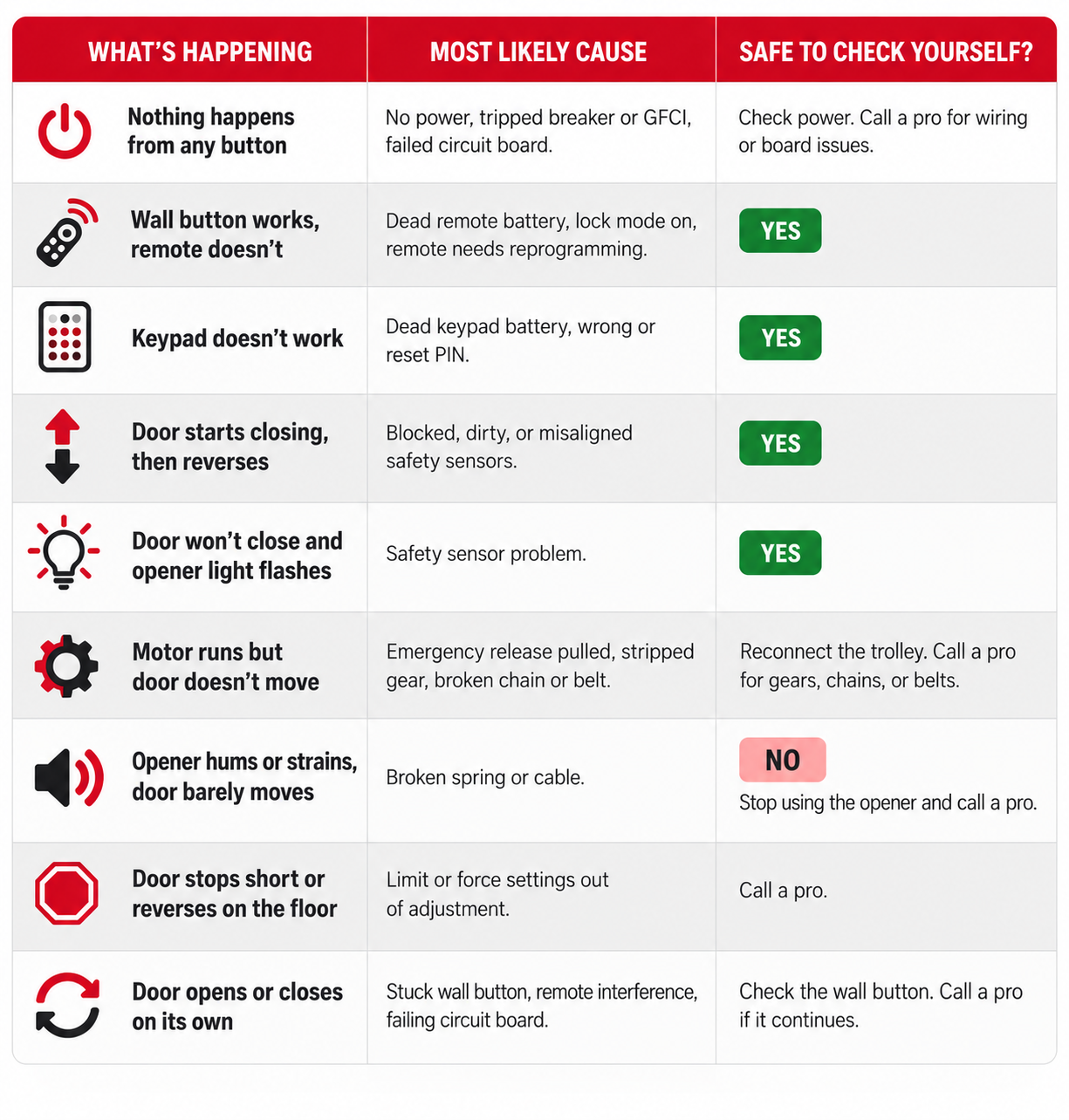
Quick Guide: What Your Opener Is Telling You
 Remote Not Working? Try These Fixes
When the wall button works but the remote doesn’t, you can usually rule out the opener itself. A dead or unprogrammed remote is one of the most common causes of a garage door opener not working, and it’s one of the easiest to fix.
Replace the Battery
Most remotes run on a small coin battery that lasts a year or two. If you have to stand closer and closer to the door for the remote to work, a weak battery is the likely culprit. Swap it out and test again.
Check the Lock Button
If every remote in the house stopped working at the same time, look at the wall console. A lock or vacation feature that’s been switched on by accident will block all remotes while the wall button still works.
Reprogram the Remote
Remotes can lose their programming after a power outage or a battery change. On many openers, you press the “learn” button on the motor unit (often behind the light cover or near the antenna wire), then press the remote button within about 30 seconds. Steps vary by brand and model, so check your owner’s manual first. If you’d like a hand, we can program remotes during a service visit, and we carry replacement garage door opener remotes.
Look for Interference
Some LED light bulbs installed in or near the opener can interfere with the remote signal. If your remote stopped working after you changed a bulb, try a bulb labeled as garage door opener compatible. Also make sure the antenna wire on the motor unit is hanging down and isn’t damaged.
Keypad Not Working?
An outdoor keypad deals with Indiana heat, cold, and moisture all year long. If yours stops responding, replace the battery first. Most keypads have a battery under the cover or a sliding panel. If a new battery doesn’t help, the keypad may need to be reprogrammed with a new PIN or replaced. As with remotes, follow the steps in your opener’s manual.
Safety Sensors: The Most Common Reason Your Door Won’t Close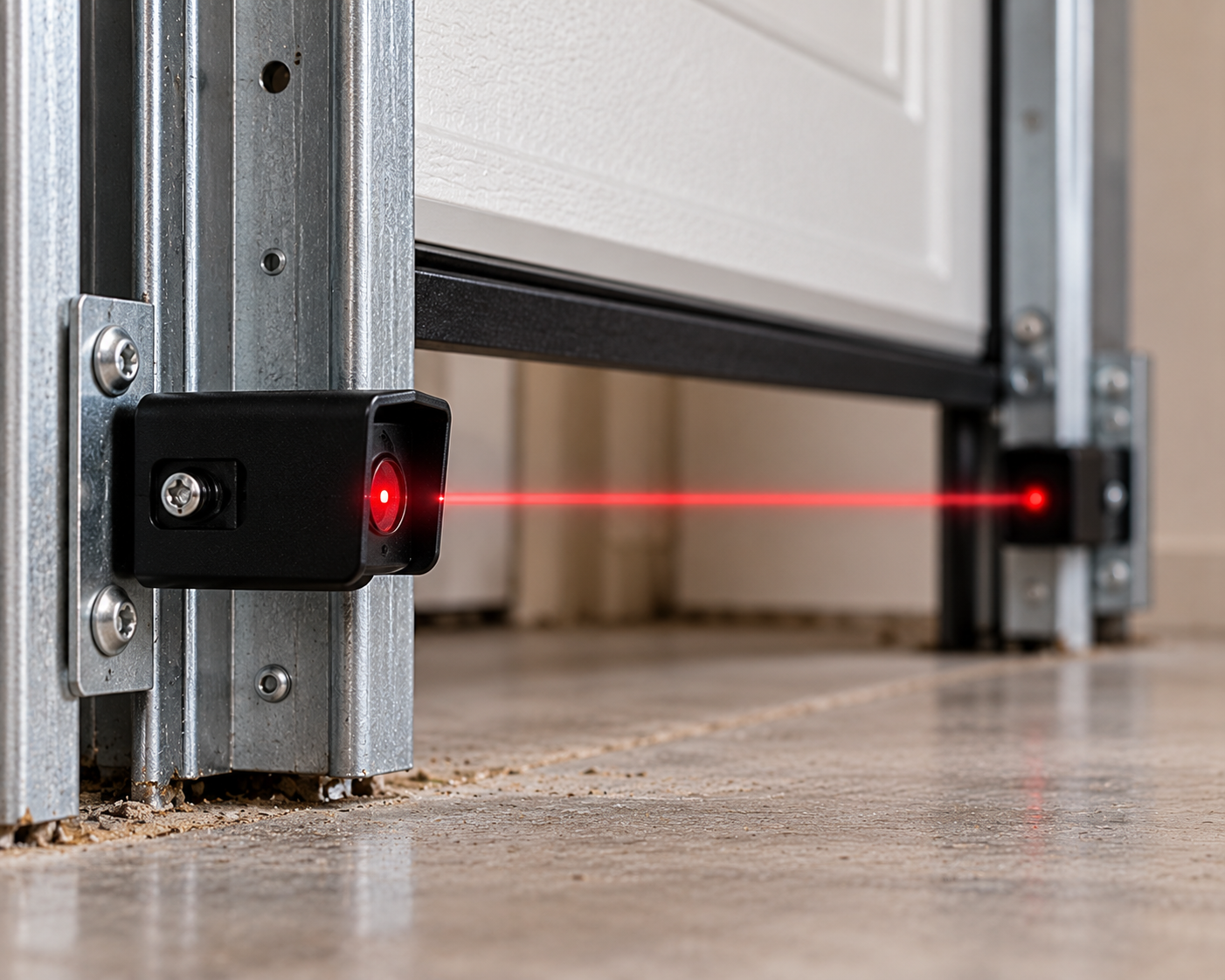
If your door goes up just fine but refuses to close, or starts down and then reverses, the safety sensors are the first place to look. This is one of the top reasons for a garage door opener not working the way it should.
Since 1993, federal safety rules have required automatic residential garage door openers to include entrapment protection, which is why your opener has two photo-eye sensors near the floor. They send an invisible beam across the doorway. If anything breaks the beam, the door won’t close. You can read the federal standard in 16 CFR Part 1211, and the Consumer Product Safety Commission has more on how these safety features protect your family.
How to Fix Garage Door Sensor Problems
- Clear the path. Move trash cans, bikes, boxes, or anything else sitting between the sensors.
- Clean the lenses. Dust, cobwebs, and road spray can block the beam. Wipe each lens gently with a soft, dry cloth.
- Check the lights. Each sensor should have a steady light. A blinking or dark light usually means the sensors are out of alignment or a wire is damaged.
- Realign the sensors. Sensors get bumped by cars, kids, and lawn equipment. Loosen the bracket slightly, point the two sensors directly at each other until both lights are steady, then tighten the bracket.
- Watch for direct sunlight. Low winter sun shining straight into a sensor can confuse it. If your door only acts up at certain times of day, this may be why.
- Inspect the wires. Look for wires that are chewed, pinched, or pulled loose. Damaged wiring is a job for a technician.
Never tape, unplug, or bypass your safety sensors to get the door to close. They’re there to keep a closing door from injuring a child, a pet, or you.
Motor Runs, but the Door Doesn’t Move
If you hear the opener running but the door stays put, the opener may have been disconnected from the door. This happens when someone pulls the red emergency release cord, often during a power outage. Our guide on how to reattach your garage door emergency pull walks you through reconnecting it.
If the door is connected and still won’t move, the problem could be a stripped drive gear, a broken chain or belt, or another internal part. Those repairs are best left to a technician.
When It’s Not the Opener at All: Springs and Cables
Here’s something many homeowners don’t realize: the opener doesn’t do the heavy lifting. Your garage door springs do. The opener just guides the door up and down. When a spring breaks, a garage door opener not working is often the first thing you notice, because the motor can’t lift the full weight of the door on its own.
Signs of a broken spring include a loud bang from the garage, a visible gap in the spring above the door, a door that feels extremely heavy, or an opener that hums and strains but barely lifts the door. If you notice any of these, stop using the opener right away. Running it against a broken spring can burn out the motor, and garage door springs are under dangerous tension. Learn more about why garage door springs break, and leave the repair to a trained technician.
Door Reverses or Stops Short: Limit and Force Settings
Your opener has settings that tell it how far to travel and how much force to use. If the door reverses as soon as it touches the floor, stops a few inches short, or doesn’t open all the way, those settings may be out of adjustment. Temperature swings, worn parts, and a door that’s out of balance can all cause the problem.
Adjusting force settings incorrectly can make your door unsafe, because the opener may not reverse when it should. We recommend having a professional handle these adjustments.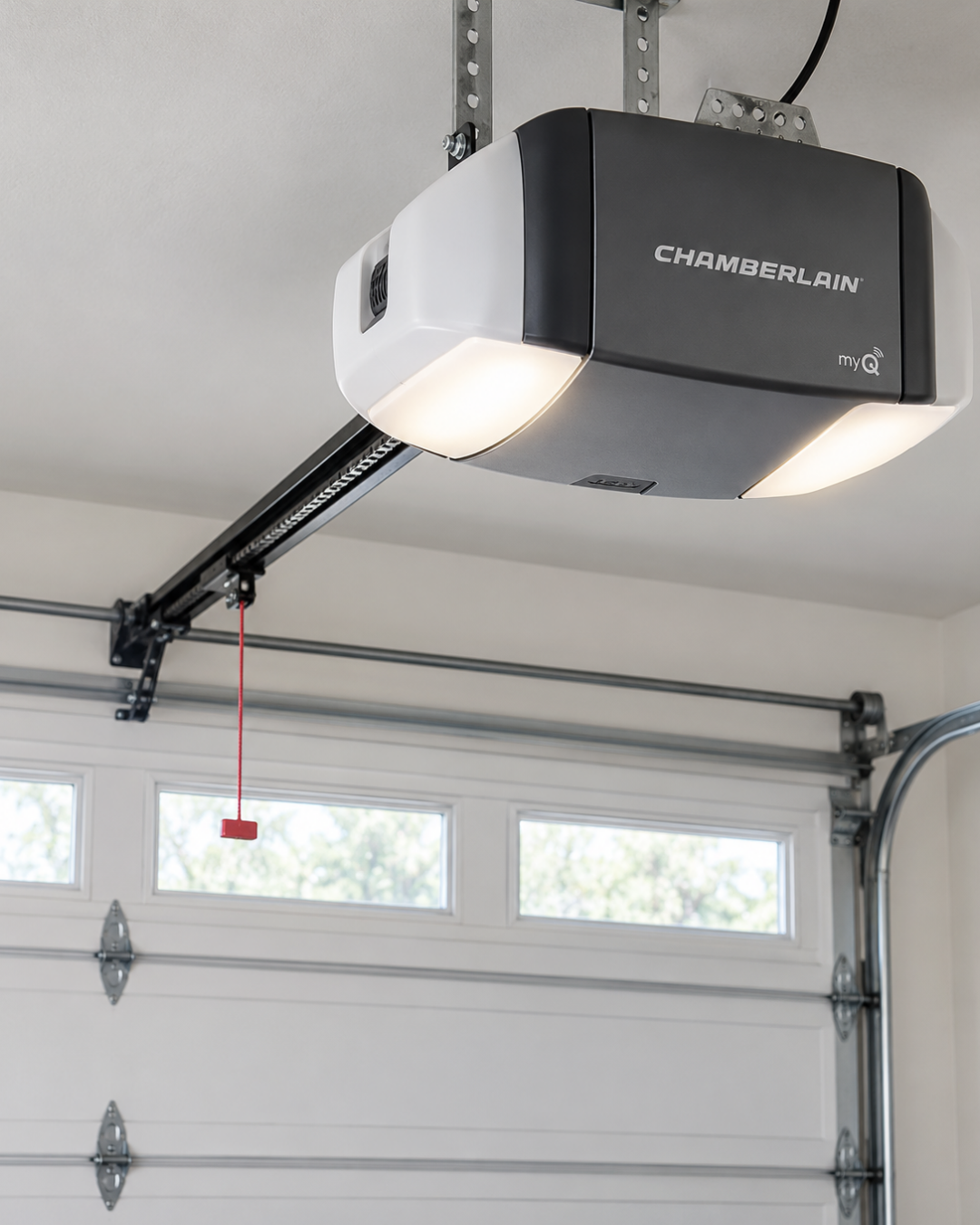
Why Indiana Winters Are Hard on Openers
Central Indiana’s cold snaps cause a spike in calls about a garage door opener not working every winter. Here’s why:
- Grease and lubricant on the tracks, rollers, and opener rail thicken in the cold, so the opener has to work harder.
- Metal parts contract, which can throw off the limit settings.
- Remote and keypad batteries lose power faster in freezing temperatures.
- A door frozen to the floor after snow or ice can trigger the opener’s safety reverse or strain the motor.
Scheduling garage door opener maintenance before winter is one of the best ways to avoid a breakdown on the coldest morning of the year.
Test Your Opener’s Safety Reverse Once a Month
Even when your opener seems to work fine, it’s worth testing the safety features regularly.
- Sensor test: Close the door and wave an object like a broom handle through the sensor beam while the door is moving down. The door should stop and reverse.
- Reverse test: Lay a 2×4 board flat on the floor in the middle of the doorway, then close the door. When the door touches the board, it should reverse.
If your door fails either test, stop using the opener and have it serviced. The DASMA technical data sheets cover garage door and opener safety in more detail.
Repair or Replace Your Opener?
An occasional garage door opener not working is usually a quick, affordable repair. Sometimes, though, replacement makes more sense. Consider a new opener if:
- Your opener is more than 10 to 15 years old and breaking down often.
- It doesn’t have safety sensors (common on openers made before 1993).
- Replacement parts are no longer available for your model.
- It’s loud, slow, or struggling even after a tune-up.
- You want features like smartphone control or a battery backup that keeps the door working during a power outage.
Our post on the 6 signs it’s time to replace your garage door opener goes into more detail, and you can explore replacement garage door openers and battery backup openers on our site.
When to Call a Professional
Call a trained technician if your garage door opener not working is caused by any of the following:
- A broken spring or cable
- Damaged wiring or a failed circuit board
- Stripped gears or a broken chain or belt
- Limit or force settings that need adjusting
- A door that’s off track, crooked, or won’t stay balanced
- Safety sensors that still won’t work after cleaning and realigning
Our technicians handle garage door opener repair across Central Indiana. If your door is stuck open or your car is trapped inside, our emergency garage door service is available around the clock.
Frequently Asked Questions
Why is my garage door opener not working with the remote but working with the wall button?
This usually means the remote battery is dead, the lock feature on the wall console is turned on, or the remote needs to be reprogrammed. Replace the battery first, check the lock button, and then reprogram the remote using your opener’s instructions.
Why does my garage door go up but not down?
A door that opens but won’t close is almost always a safety sensor problem. Check for anything blocking the sensors, clean the lenses, and make sure both sensor lights are steady. If a light is blinking, the sensors are likely out of alignment.
Why is my garage door opener light blinking?
On many openers, a flashing light means the safety sensors are blocked, dirty, or misaligned. Some openers also use flashing patterns as diagnostic codes, so check your owner’s manual for what your model’s pattern means.
What should I check first if my garage door opener is not working at all?
Start with power. Make sure the opener is plugged in, the outlet works, and the breaker or GFCI outlet in your garage hasn’t tripped. If the opener has power but still won’t respond to the wall button or the remote, the circuit board or wiring may need professional repair.
Can cold weather cause my garage door opener to stop working?
Yes. Cold temperatures thicken lubricants, cause metal parts to contract, and drain remote and keypad batteries. A door frozen to the floor can also cause the opener to strain or reverse. Regular maintenance before winter helps prevent these problems.
How long do garage door openers last?
Most garage door openers last about 10 to 15 years with regular maintenance. How long yours lasts depends on how often you use it, how well the door is balanced, and whether the opener gets routine service.
Get Your Garage Door Opener Working Again
A garage door opener not working doesn’t have to ruin your day. Try the quick fixes above, and if the problem points to springs, wiring, gears, or settings, let the experts at Garage Doors of Indianapolis take it from there. We’ve been helping homeowners across Central Indiana since 1979. Is your garage door opener not working, take some time and schedule a residential service call online.